What Is the Difference Between Norse Mythology and Viking History?
A hammer-wielding Thor, a longship cutting through grey water, a settlement under attack: a few images are often enough to tell us that a story is “Viking”. But they may be drawing on very different things. Thor belongs to Norse mythology; longships and settlements belong to the material history of the Viking Age. A modern film or game can put them side by side, but that does not make them the same kind of evidence.
Understanding the difference is useful whether you are watching a historical drama, playing a game, visiting an exhibition or reading about norse gods in media. Mythology tells us about stories, beliefs and the imaginative worlds people made. History asks what we can responsibly infer from objects, texts and traces of past lives. The two overlap, but neither is a substitute for the other.
The short answer: stories and evidence
Norse mythology is a body of stories and beliefs associated with pre-Christian Scandinavia and the wider Norse-speaking world. It includes figures such as Odin, Thor, Loki and Freyja, as well as stories about the creation and destruction of the cosmos. Much of what survives was written down in Iceland centuries after the Viking Age, in works such as the Poetic Edda and the Prose Edda. These texts are invaluable, but they are not straightforward transcripts of what every Viking believed.
Viking history concerns people, places and events in the period conventionally called the Viking Age, often dated from around the late eighth to the mid-eleventh century. The word “Viking” is frequently used today for all Norse people of that era, but historically it could refer more specifically to raiding or seafaring activity. People in Scandinavia were also farmers, craftspeople, traders, parents, rulers and neighbours. Most were not spending their days on raids.
History is built from different kinds of evidence: excavated buildings and burials, tools and weapons, ship remains, coins, inscriptions and written accounts. Each source has limits. An object can tell us something about its material and use, but rarely gives us a complete account of its owner’s thoughts. A saga can preserve older traditions while also reflecting the time and purposes of the person who wrote it down.
Mythology versus evidence: why the distinction matters
It is tempting to treat a myth as a report of a historical event, or to assume that every archaeological object confirms a particular story. Usually, the evidence does not allow that kind of certainty. A burial containing valuable goods tells us about funerary practice and status; on its own, it cannot prove exactly what the deceased believed about the afterlife.

Equally, surviving myths are not simply “made up” in the modern sense. They are meaningful cultural sources. They show how later storytellers framed divine power, fate, conflict and the world’s order. But the surviving written versions were recorded after Scandinavia’s conversion to Christianity had begun. Their authors worked in a changed religious and political landscape, and the stories may have been adapted, selected or shaped in transmission.
This is the heart of mythology vs evidence: myths can be evidence for storytelling and religious ideas, while archaeology can be evidence for material life. Neither gives us an unfiltered view of the past. A careful account asks what a source can support, what it cannot, and how certain we should be.
The visual vocabulary of “Viking”
Modern entertainment has a handy visual vocabulary for establishing a Viking setting. Longships, round shields, timber buildings and windswept shorelines quickly signal a world of seafaring and conflict. These images are not arbitrary: they draw on real objects and places. The challenge is that a recognisable shorthand can flatten a varied society into a single dramatic scene.
Ships: more than raiding machines
Ships are among the most powerful images associated with the Viking Age. Their shallow draught and adaptable design made it possible to travel along coasts and, in suitable conditions, navigate rivers. Seafaring supported trade, migration, exploration and warfare. A ship on screen may be carrying raiders, but ships also moved people and goods between communities.
Archaeological finds, including preserved ship remains, offer material evidence of construction. Yet a ship is not a complete explanation of a voyage. A scene showing a fleet arriving in a strange land is a storytelling choice; historical interpretation needs to consider routes, seasons, the purpose of travel and the evidence for contact.
Shields: striking images, varied realities
Round shields have become a familiar part of Viking screen design. They make a clear silhouette and work well in choreographed battle scenes. Surviving fragments and representations help researchers study shield construction, but a complete, brightly painted shield on screen may be a creative reconstruction rather than a direct copy of a single surviving example.
There is also a practical difference between depicting a shield and making a battle realistic. Film and games need readable action: audiences should be able to see who is fighting whom. Historical combat was messier, and the sources seldom provide the kind of detailed instruction that a modern action sequence might suggest.
Settlements: the everyday setting behind the spectacle
Settlements are essential if we want to understand viking age daily life. Archaeology reveals homes and workshops, along with evidence for farming, food preparation, craft production and exchange. A settlement was not simply a backdrop for a raid or a throne-room argument. It was where people worked, repaired equipment, raised families and negotiated social relationships.
In a drama, a single village may stand in for an entire society. In reality, lives differed by region, wealth, occupation and circumstance. An appealing visual reconstruction can make a past place feel tangible, but details such as costume, architecture and household objects should still be treated as interpretations unless they are supported by specific evidence.
Why games establish a setting faster than film
Games and films face different storytelling problems. A film can use establishing shots, dialogue, costume and music to build a world over time. A game often needs the player to understand the setting almost immediately: where they are, what they can interact with and what kind of story they have entered.
That makes games especially reliant on visual cues. A longship at the harbour, a carved symbol, a settlement in the distance or a character carrying a round shield can communicate “Viking world” before a line of dialogue is spoken. This speed is a strength of the medium. It also encourages compression: a single recognisable object may be asked to stand for centuries of history and a range of cultures.
Film has its own shorthand, but it can spend more time on atmosphere and character. A slow view across a settlement, for instance, may imply daily routine without explaining it. In either medium, the difference between strong historical storytelling and misleading certainty is often a question of framing. Does the work signal that it is imagining a possible past, or does it present every dramatic detail as established fact?
HistoryMedieval is one example of the kind of name readers might encounter while exploring historical subjects online; whatever the platform, it is worth checking whether a claim points to archaeological research or a primary source. The same care applies when Viking imagery appears in contemporary entertainment or branding, including companies named Mr Q and MrQ. A visual motif can be effective marketing without being a reliable lesson in history.
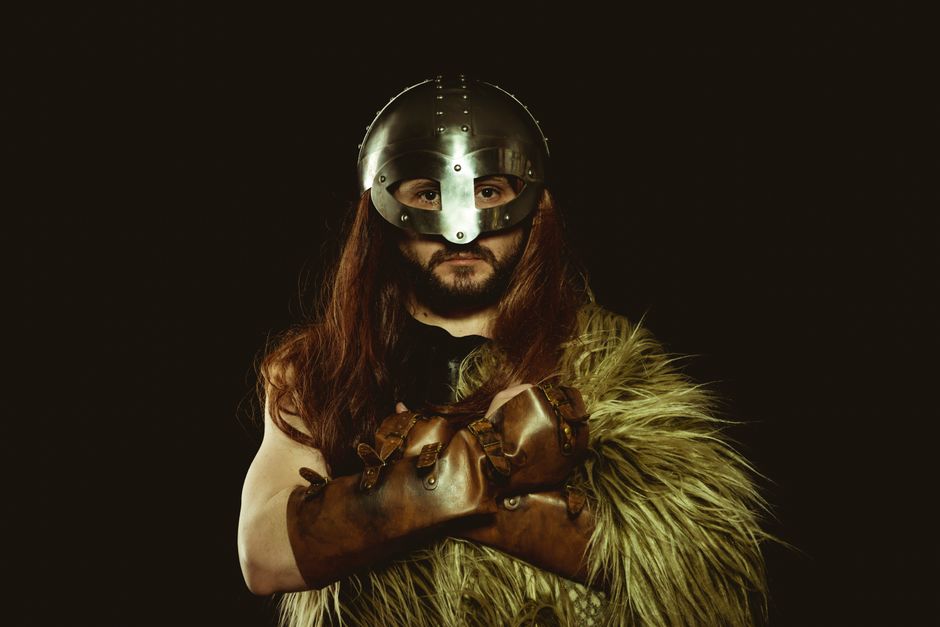
The horned helmet: a myth about the Vikings
The horned Viking helmet is probably the most persistent historical misconception associated with the period. It is instantly recognisable, dramatic and easy to reproduce in illustrations, costumes and games. But there is no good evidence that Viking Age warriors routinely wore helmets with horns into battle.
Why does the image persist? Part of the answer lies in later artistic and theatrical representations. In the nineteenth century, artists and designers helped shape a romanticised Viking look, and horned headgear became a striking stage image. Once that visual shorthand was established, it travelled through popular illustration, performance historymedieval.com and, eventually, film, television and games. Repetition made the image feel historical.
There is also a simple design advantage: horns make a character legible at a glance. They distinguish a “Viking” silhouette from an ordinary helmet. But visual clarity is not evidence. Horns would also be awkward projections in close combat, where an opponent could potentially catch or strike them.
Gjermundbu: a reality check
The Gjermundbu helmet offers a useful counter-image. Discovered in a burial in Norway and generally dated to the tenth century, it is the most complete Viking Age helmet known from Scandinavia. Its iron construction includes a rounded cap, a protective eye-and-nose guard and a framework of bands. It has no horns.
One helmet cannot tell us what every warrior wore, and the scarcity of surviving helmets makes broad conclusions difficult. Metal could be reused, and preservation conditions vary. Still, Gjermundbu is a real archaeological object, while the familiar horned battle helmet is largely a product of later imagination. It is a good example of how evidence can correct a powerful image without making the past any less interesting.
At a glance: mythology and Viking history
Question Norse mythology Viking history What does it explore? Gods, cosmic stories, values and supernatural worlds People, places, objects, events and social life What sources are used? Poems, sagas and later written versions of traditions Archaeology, inscriptions, coins, ship remains and texts What can it tell us? How stories and religious ideas were remembered and shaped What evidence supports about life and events in the past What should we be careful about? Assuming surviving texts preserve one unchanged, universal belief Treating an incomplete object or account as the whole storyHow to enjoy Viking stories without confusing them with history
You do not need to stop enjoying a myth-inspired game or film to be historically curious. The two experiences can enrich one another, as long as we keep their purposes in view. A useful approach is to ask a few questions when a story presents a striking detail:
- Is this a mythic element? A god appearing in person belongs to a different category from an excavated ship.
- What is the evidence? Look for references to objects, sites, inscriptions or written sources, rather than accepting a confident tone as proof.
- Is this a visual shortcut? Horns, dramatic tattoos and constant battle may communicate a genre quickly without representing typical daily life.
- What is missing? Trade, farming, craft and family life can be less spectacular than raids, but they are central to understanding the period.
Keeping the wonder, adding the context
Norse mythology and Viking history are connected, but they answer different questions. The myths give us gods and stories that have travelled far beyond their original setting. Historical research examines the human world of the Viking Age through objects, landscapes and imperfect written records. A longship can be both an archaeological subject and a powerful symbol; a story about Thor can be culturally important without serving as a literal record of a raid.
The horned helmet shows how an image can outlive its evidence. Gjermundbu reminds us to return to the objects themselves. And the next time a game establishes its Viking world in seconds, you can enjoy the efficient storytelling while noticing what has been compressed: not just battles and gods, but also work, exchange, belief and ordinary life.
If you want to keep a copy of this guide, use your browser’s Print Article (PDF/print function). You can also pass it along using a Facebook share option, if one is available on the page.