What Should a “Realistic” Viking Helmet Look Like?
Ask someone to picture a Viking and the answer often arrives fully dressed: longship, round shield, fur cloak, and a helmet sprouting two extravagant horns. The image is instantly legible. It is also a poor guide to what a Viking Age helmet probably looked like.
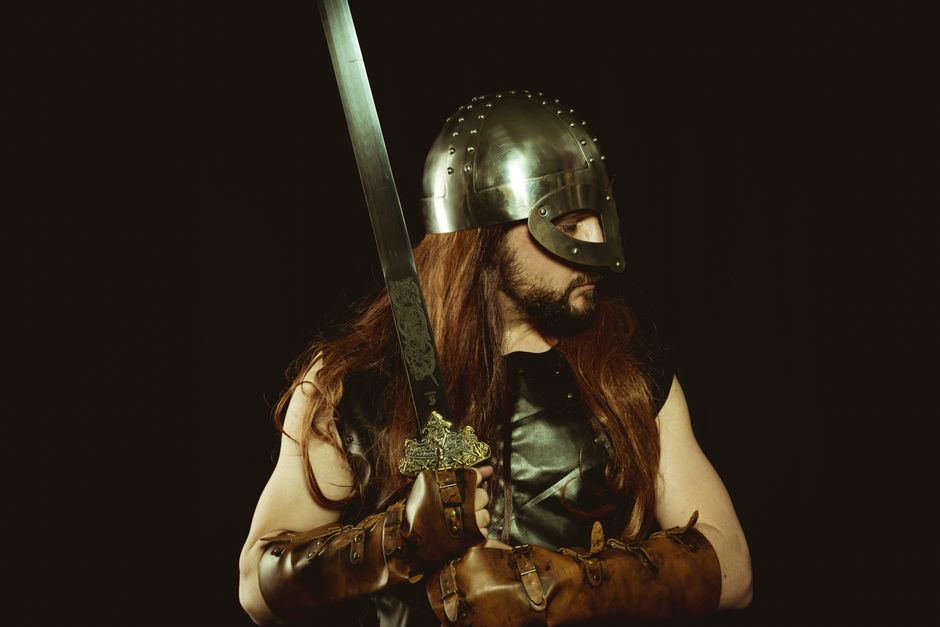
That gap matters because historical realism is not simply a matter of removing the horns. A convincing helmet has to fit the evidence, the limits of what its maker could produce, and the practical needs of someone wearing it. The surviving material is sparse, but one remarkable find gives us a useful starting point: the Gjermundbu helmet from Norway. It offers a reality check against both fantasy art and the familiar horned caricature.
So what should a “realistic” Viking helmet look like? In brief, picture a plain, rounded iron helmet, with protection around the eyes and nose—not a pair of horns. Then leave room for uncertainty. We have too few surviving helmets to claim that one design represents every warrior, region or century of the Viking Age.
Start with the Viking visual vocabulary
Vikings are usually introduced through a set of strong visual cues. A longship suggests travel and raiding; a round shield suggests a shield wall; timber buildings, workshops and trading places suggest settlements. Each image does useful work, but none tells the whole story. A ship is not proof that every Viking spent every day at sea, and a shield does not tell us what every fighter wore on their head.
Helmets are harder to show than ships or shields. A ship’s silhouette reads clearly at a glance. A helmet is smaller, often partly hidden by hair, shadow or an angle of view. For a game designer or filmmaker trying to identify a character quickly, the temptation is to add an instantly recognisable detail. Horns do that very effectively, even if they do not make the helmet more historically credible.
That is why the broader visual vocabulary matters. A careful depiction can establish a Viking setting through ships, shields, settlement architecture, clothing, tools and landscape, rather than asking a single piece of headgear to carry the entire burden of recognition. A historically restrained helmet can feel more convincing when the world around it has been made distinctive and richly observed.
The speed of setting establishment: games versus film
Games and films face different storytelling problems. A film can spend time establishing a place through a sequence: a shoreline, a ship being hauled ashore, smoke above a settlement, then people going about their work. Viewers can absorb several details before the helmet of any one character becomes important.
A game often has to make its world readable in a fraction of that time. The player may see a character at a distance, in changing light, or amid a crowded fight. Designers use strong silhouettes and repeated visual patterns to communicate roles and factions quickly. A horned helmet is a blunt but effective signpost: it says “Viking” to many players before the character has spoken a word.
Neither medium is automatically more or less historical. The question is what a visual choice is doing. If horns are used as shorthand for a fantasy culture, that can be an intentional design decision. If a production presents them as ordinary Viking battle equipment, it has turned a convenient visual code into a historical claim.
There are alternatives to that shortcut. Games can distinguish characters through shield paint, clothing, weapons, hair, armour details or the designs of their settlements. Films can use camera work and costume variation to make a helmet legible without giving it an implausible silhouette. Historical accuracy need not mean visual dullness; it means building drama from details that have some relationship to the past.
The horned helmet myth—and why it persists
The simple answer is that horns make a memorable picture. The longer answer has to do with how popular images get made. In the nineteenth century, artists and designers helped shape a dramatic, romantic image of the Viking. Horned headgear became part of that costume language, reinforced by illustrations, stage productions and later screen imagery. Once it was familiar, it became a handy visual shorthand for audiences.
There is no good archaeological basis for treating horned helmets as standard Viking battle gear. The famous Gjermundbu helmet has no horns, and the broader evidence does not support the idea that the typical Viking warrior wore a horned iron helmet into combat. This does not prove that no person in the Viking Age ever wore a horned headpiece in any context. It does mean that the standard horned warrior helmet belongs to the history of modern popular imagery, not to a secure picture of everyday Viking warfare.
The myth survives because repetition feels like evidence. A viewer sees horns in a comic, then a game, then a fancy-dress display; the image becomes so familiar that a plain helmet can look strangely “wrong”. There is also a practical storytelling reason: horns create a striking silhouette and make characters easy to identify. Familiarity and usefulness, however, are not the same as historical accuracy.
Gjermundbu: a reality check in iron
The Gjermundbu helmet is a crucial point of reference because it is the best-known surviving Viking Age helmet, and the only nearly complete example usually cited from the period. It was found in a tenth-century burial in Norway. The object is damaged and incomplete in places, but it gives us physical evidence that drawings and dramatic costume designs cannot provide.
Its shape is broadly rounded, made from iron components, and its most distinctive feature is a spectacle-like guard around the eyes and nose. That guard is sometimes described as a “spectacle” or “eyebrow” arrangement. It protects the central face while leaving the wearer’s mouth and much of the face uncovered. The helmet’s surviving form is a world away from the familiar horned silhouette.
It is also a reminder not to overstate what one find can tell us. Archaeologists do not have a large collection of intact Viking helmets from which to calculate a universal standard. Iron can rust away, objects can be broken or recycled, and burial practices do not preserve a representative sample of everything people once owned. The Gjermundbu helmet is valuable precisely because so little comparable material survives—not because it proves every Viking helmet looked exactly like it.
For anyone searching for viking era helmet finds, the important distinction is between an archaeological object and a reconstruction inspired by it. A museum display, a modern replica and a costume illustration may all look plausible at first glance, but they do not have the same evidential status. Look for a clear description of what is original, what has been reconstructed, and which details remain uncertain.
What would a plausible helmet look like?
A historically cautious design would begin with a rounded iron helmet rather than a fantastical one. It might use a framework of joined iron pieces, with a brow or face guard inspired by the Gjermundbu example. The key feature is eye nose protection: enough structure to shield vulnerable parts of the face, without pretending that the wearer had a fully enclosed, modern-style visor.
That description is intentionally modest. The surviving evidence does not justify one standard recipe for Viking helmets. Materials, construction and decoration may have varied. Some fighters may have had helmets; others may not. A plain design is not a claim that every helmet was plain, and an ornate reconstruction should not be presented as typical merely because it looks impressive.
A useful visual guide is to separate what we can say with confidence from what is a reasonable possibility:
Feature What the evidence supports What to treat cautiously Overall shape A rounded iron form is supported by the Gjermundbu find. One exact shape representing every Viking helmet. Face protection The Gjermundbu helmet has a distinctive guard over the eyes and nose. A fully enclosed face covering as a universal feature. Horns They are not present on the Gjermundbu helmet and are not supported as standard battle gear. Horns as the normal equipment of Viking warriors. Decoration Individual designs may have varied; surviving evidence is limited. Highly elaborate decoration presented as typical without evidence.How to judge a reconstruction
When you encounter a helmet in a museum, game, book or online shop, a few questions can help separate evidence from invention. The goal is not to dismiss every imaginative design. It is to know when you are looking at a reconstruction, a fantasy costume, or a claim about historical equipment.
- Is the object linked to a find? A reference to Gjermundbu gives a reconstruction a clear starting point, though it does not make every added detail authentic.
- Are additions labelled? A maker should distinguish surviving features from modern choices, such as added decoration or a particular lining.
- Does the design rely on horns for recognition? If so, it may be drawing on modern Viking imagery rather than archaeological evidence.
- Is the uncertainty acknowledged? Because the surviving sample is small, confident claims about “the Viking helmet” deserve a second look.
Names such as HistoryMedieval, Mr Q and MrQ may turn up in a search for history-themed products or content. Whatever the source, the same questions apply: does it explain the evidence behind the object, and does it clearly label artistic interpretation? A convincing photograph or product description is not, by itself, proof of archaeological accuracy.
Realism does not mean one look for everyone
It is tempting to replace one stereotype—the horned helmet—with another: a single, standard iron cap worn by every Viking. The evidence does not support that either. “Viking” covers many people and generations, and archaeological survival is patchy. A helmet in a dramatic scene may reasonably differ from one in another place or period, as long as the design is presented with suitable care.
Realism can also include absence. A warrior without a helmet may be more plausible than a cast in which every extra wears matching iron headgear. A practical helmet would have cost resources and required skilled work. We should not assume that all fighters could afford one, or that surviving graves give us a complete census of equipment.
A better kind of Viking silhouette
If you want a quick visual test, start with the Gjermundbu helmet: rounded iron, an open face and a distinctive guard for the eyes and vikings series historical errors nose. Leave the horns out unless the work is deliberately using fantasy or modern popular imagery. Then look beyond the helmet. Ships, shields and settlements can establish the world more richly than a costume cliché ever could.
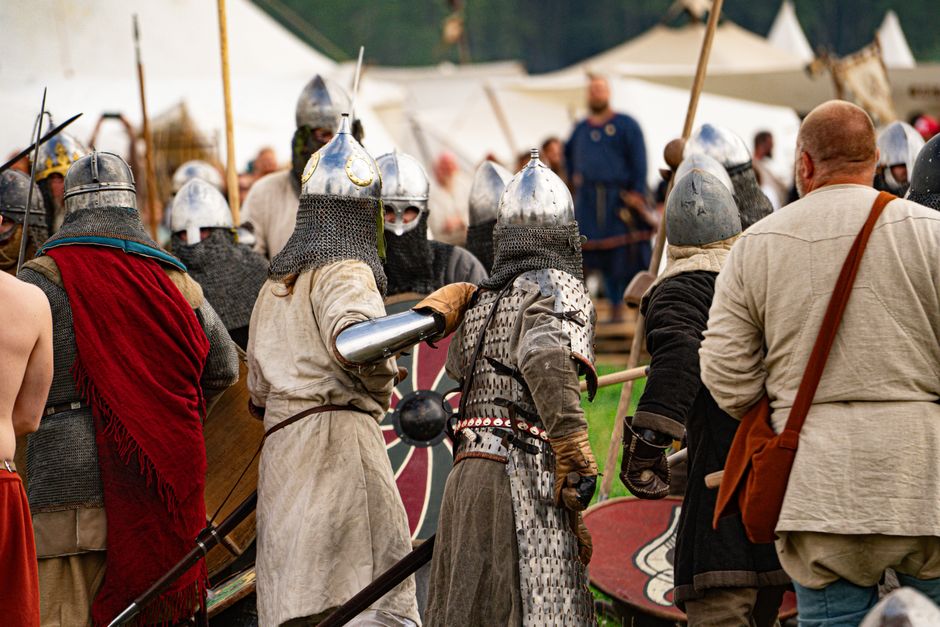
The result need not be less dramatic. A grounded design can make a character feel like a person from a specific time and place, rather than a walking symbol. In games, that may mean finding more nuanced ways to signal a faction. In film, it may mean allowing the landscape and the life of a settlement to do some of the storytelling. The best historical images invite us to look again, not just recognise a familiar shortcut.
If this guide Discover more here is useful, use the Print Article (PDF/print function) to save a copy for later, or share it with friends through Facebook share. The next time a horned helmet appears on screen, you will know what it is doing: telling a story about Vikings, certainly, but not necessarily telling us what a Viking helmet really looked like.