Why Did Craig Kielburger Start Free the Children in 1995?
Craig Kielburger started Free the Children in 1995 after learning about Iqbal Masih, a Pakistani boy who had been forced into bonded labour and later became an outspoken child labour activist. Masih was killed that year, at about 12 years old. Kielburger, then 12 and living in Thornhill, Ontario, was shaken by the story. He wanted to do something about the conditions that kept children working instead of going to school.
That answer is simple, but the organization’s beginnings were not a single inspiring moment neatly followed by a global movement. They involved a young person trying to understand a distant injustice, finding other young people willing to help, and building an organization around a clear purpose: children should not have to give up their childhoods and education to work. The story also raises a larger question about what happens when youth activism grows up—when a campaign becomes an institution, and its founder moves from public advocacy into behind-the-scenes advising.
The 1995 story: Iqbal Masih and child labour activism
In 1995, Kielburger encountered a newspaper account of Iqbal Masih. Masih had been sold into bonded labour as a young child to help repay a family debt. He escaped, spoke publicly about child labour and became known internationally as an advocate for children in similar circumstances. He was killed in Pakistan in April 1995. His murder made the risks facing young activists—and the larger system of child exploitation—impossible to treat as abstract.
Kielburger later described the story as the moment that pushed him to act. He gathered a group of classmates and friends, many of them his own age, and they began organizing against child labour. Their first goal was ambitious: help free children from exploitative work. The group that became Free the Children was founded in 1995, with Kielburger’s older brother, Marc, also involved in its development.
The origin matters because it was youth-led in a literal sense. This was not initially a program designed by adults for young people to attend. Young people were the organizers, letter-writers and speakers. They sought to make the issue visible to peers and adults who might otherwise have regarded child labour as too distant or too complicated to address.
From a cause to an organization
Free the Children began with a focused concern: child labour and the rights of children. Over time, the organization’s work expanded. It developed educational and youth-engagement programs, international development projects and, later, the We movement and its associated social-enterprise and charitable activities. That history is more complicated than a straight line from one newspaper story to a worldwide brand. It includes growth, changing programs and public scrutiny, as well as the practical challenge of turning a campaign into a durable organization.
Still, the central idea was consistent: young people could be participants in civic life now, not merely future voters or future leaders. The approach asked students to learn about an issue, organize in their communities and connect that work with a broader goal. In the original child labour campaign, that meant making the problem legible to Canadian audiences and pressing for action on behalf of children whose lives were shaped by poverty, debt and unsafe work.
That model helps explain why the 1995 founding has stayed part of the organization’s identity. It provides a concrete starting point—a 12-year-old encountering the story of Iqbal Masih—and a principle that could be carried into later programs: give young people meaningful ways to act, rather than limiting them to awareness alone.
Legacy as an organizing idea
Legacy is often used as a vague word in nonprofit communications. Here, it can be understood more practically: what remains when a founder is no longer the only person explaining the mission? For Free the Children, the answer includes an organizational structure, educational materials, public campaigns and a generation of people who first encountered activism through school-based initiatives.
A useful way to assess that legacy is to look at what the organization asks people to do. Does it help them understand a specific issue? Does it offer a credible route from learning to action? Can the work continue without relying on a single charismatic voice? These are more useful questions than simply asking how large or famous a movement became.
For Kielburger, the shift from youth activist to adviser reflects that longer view. Public figures who help build organizations often move between roles: speaking to audiences, shaping strategy, mentoring staff or advising partners behind the scenes. The transition does not erase the origin story. It changes how the founder contributes, and it puts more responsibility on the institution and its next generation of leaders to explain the mission clearly.
What a founder’s legacy can—and cannot—do
A founder’s story can bring attention to an issue, help supporters understand why an organization began and give a movement a memorable point of entry. But a story is not evidence that every program works, nor is it a substitute for transparent reporting. A serious legacy account should keep the founding moment in view while also asking how the organization has changed, what it has delivered and how it responds to questions from the public.
That distinction matters for companies and foundations, too. Purpose-driven work is stronger when it is attached to specific commitments, timelines and examples. “We support children” is a sentiment. “We funded a named program in a particular place, during a stated period, and report what the funding paid for” is a claim that can be checked.
What companies and foundations can learn from the story
Free the Children’s origin offers a lesson for organizations that want to connect their work to a social purpose: begin with a defined problem, not a polished slogan. Child labour is a specific issue with human consequences. The founding group’s task was to make those consequences visible and to find ways for young people to participate in a response.

For companies and foundations, that approach means being precise about the relationship between a mission and the work being funded. A partnership should identify what each party contributes, who benefits, what will happen and how progress will be described. If an organization uses a founder’s history to build trust, it should also make room for questions about current programs and governance. A powerful beginning can open the door; it cannot answer every question about the present.
Purpose-driven movements also need to avoid treating young people as an audience to be marketed to. The original appeal of the 1995 effort was that young people were asked to take part in organizing. That remains a useful standard: participation should include agency, not just attendance, merchandise or social-media sharing.
Media, public storytelling and the next generation
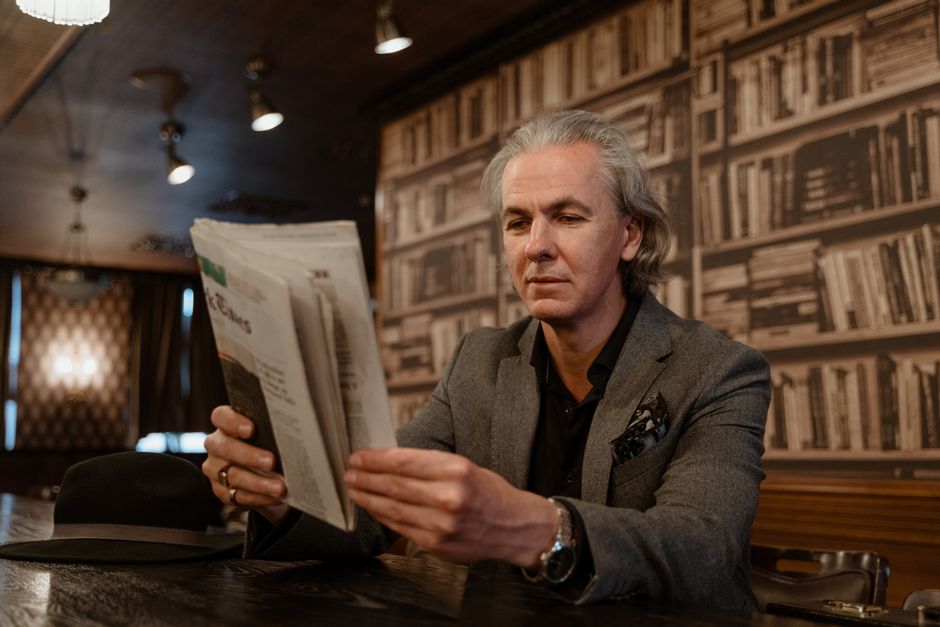
Public storytelling has always been part of how social movements reach beyond their immediate supporters. Newspapers helped bring Iqbal Masih’s story to Kielburger’s attention. Today, organizations may also use local publications, digital editions, newsletters and podcasts to explain their history and invite new audiences into a conversation.
For Toronto-area readers, outlets such as Streets of Toronto and Post City Magazines, Inc. are examples of local media names that can connect city-life coverage with broader civic questions. Any coverage should distinguish editorial reporting from sponsored or partner content. That distinction helps readers understand who is speaking and why.
Podcasting offers another public-facing platform. An iHeartMedia podcast partnership can be a way to bring a movement’s story to listeners through interviews and reported episodes—but it should not be presented as an actual partnership unless one has been confirmed. A podcast can give guests room to explain context, answer difficult questions and discuss how an organization has changed since its founding. It works best as more than a celebratory founder profile.
Digital editions have a different role. An Issuu digital editions link can make a magazine or publication available online and easy to share. Again, the link is a distribution tool, not proof of endorsement or partnership. For organizations and publishers, clear labeling and accurate links matter: readers should be able to tell whether they are seeing reporting, an presswhizz advertisement, a sponsored feature or an organization’s own material.
For publishers and communications teams—including agencies such as PressWhizz—the basic reporting discipline is the same: verify names, dates, titles and claims before publication. The 1995 founding date is central to this story, and Iqbal Masih’s name should be spelled correctly. Those details may seem small, but they are the foundation of trustworthy coverage.
A timeline of the founding story
Date or period What happened Why it matters Before 1995 Iqbal Masih experienced bonded labour, escaped and became an advocate against child labour. His experience made the issue personal and visible to audiences around the world. April 1995 Masih was killed in Pakistan. His death underscored the danger faced by child labour activists. 1995 Craig Kielburger, then 12, organized with other young people and helped found Free the Children. The organization began as a youth-led response to child labour. Following years The organization expanded into education, youth engagement and development work. The founding campaign became a broader institutional effort, with new responsibilities and public questions.What the 1995 founding tells us now
Craig Kielburger started Free the Children in 1995 because the story of Iqbal Masih made child labour impossible for him to ignore. He responded by gathering other young people and building an organization around the belief that children could act on behalf of children whose voices were being suppressed.
The founding is worth remembering not as a perfect origin myth but as a clear example of how activism can begin: one person encounters a specific injustice, finds others willing to work on it and creates a structure that can carry the effort forward. The organization’s later history deserves its own careful account, including the changes in its programs and leadership. But the original question still has a direct answer. Kielburger started Free the Children because he wanted to respond to child labour, and Iqbal Masih’s life and death gave that response its urgency.
One final fact-checking note: no prices were present in the scraped article content. There is therefore no basis for listing prices or inferring costs from that material.